




Fragile Environments
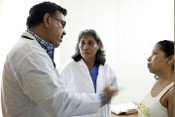
Indigenous Peoples’ Access to Health Services
This publication sets out to examine the major challenges for indigenous peoples to obtain adequate access to and utilization of quality health care services. It provides an important background to many of the health issues that indigenous peoples are currently facing. Improving indigenous peoples’ health remains a critical challenge for indigenous peoples, States and the United Nations. [from forward]
- 2468 reads
Human Resources for Health in Six Healthcare Arenas Under Stress: A Qualitative Study
Research on “human resources for health” (HRH) typically focuses on the public health subsector, despite the World Health Organization’s inclusive definition to the contrary. This qualitative research examines the profile of HRH in six conflict-affected contexts where the public health subsector does not dominate healthcare service provision and HRH is a less coherent and cohesive entity: Afghanistan, the Central African Republic (CAR), the Democratic Republic of Congo (DR Congo), Haiti, the Occupied Palestinian Territories and Somalia. [from abstract]
- 514 reads
Exploring the Influence of the Global Fund and the GAVI Alliance on Health Systems in Conflict-Affected Countries
Global Health Initiatives (GHIs) respond to high-impact communicable diseases in resource-poor
countries, including health systems support, and are major actors in global health. GHIs could play an important role
in countries affected by armed conflict given these countries commonly have weak health systems and a high
burden of communicable disease. The aim of this study is to explore the influence of two leading GHIs, the Global
Fund and the GAVI Alliance, on the health systems of conflict-affected countries. [from abstract]
- 451 reads
Quality of Intrapartum Care by Skilled Birth Attendants in a Refugee Clinic on the Thai-Myanmar Border: A Survey Using WHO Safe Motherhood Needs Assessment
This manuscript describes the quality of intrapartum care provided by SBAs [Skilled Birth Attendants] in Mae La camp, a low resource, protracted refugee context on the Thai-Myanmar border. [from abstract]
- 577 reads
The Free Health Care Initiative: How Has it Affected Health Workers in Sierra Leone
No study to date has focused on how the decisions made, or not made, in the post-conflict
period can affect the longer term pattern of attraction, retention, distribution and
performance of health workers, and thus ultimately the performance of the sector. [from abstract]
- 641 reads
Evaluations of Reproductive Health Programs in Humanitarian Settings: A Systematic Review
Provision of reproductive health (RH) services is a minimum standard of health care in humanitarian settings; however access to these services is often limited. This systematic review, one component of a global evaluation of RH in humanitarian settings, sought to explore the evidence regarding RH services provided in humanitarian settings and to determine if programs are being evaluated. [from abstract]
- 515 reads
Health Systems and Gender in Post-Conflict Contexts: Building Back Better?
As part of a larger research project that explores whether and how gender equity considerations are taken into account in the reconstruction and reform of health systems in conflict-affected and post conflict countries, we undertook a narrative literature review based on the questions “How gender sensitive is the reconstruction and reform of health systems in post conflict countries, and what factors need to be taken into consideration to build a gender equitable health system?” We used the World Health Organisation’s (WHO) six building blocks as a framework for our analysis; these six b
- 594 reads
Violence Against Healthcare Workers
The objective of SICOT is “to promote the advancement of the science and art of orthopaedics and traumatology at international level in particular for the improvement of patient care; to foster and develop teaching, research and education; to facilitate and encourage exchange of professional experience and to promote good fellowship among its members.” [from introduction]
- 583 reads
The “Empty Void” is a Crowded Space: Health Service Provision at the Margins of Fragile and Conflict Affected States
Definitions of fragile states focus on state willingness and capacity to ensure security and provide essential
services, including health. Conventional analyses and subsequent policies that focus on state-delivered essential services miss many developments in severely disrupted healthcare arenas. The research seeks to gain insights about the large sections of the health field left to evolve spontaneously by the absent or diminished state. ]from abstract]
- 588 reads
Public Health in the Age of Ebola in West Africa
The world is witnessing the unprecedented unfolding of the West African Ebola epidemic. The epidemic could have major ramifications for global public health in ways that no other modern infectious disease has, perhaps including AIDS, and can be viewed as a “Black Swan” event. What we call here a Black Swan (and capitalize it) is an event with the following three attributes. First, it is an outlier, as it lies outside the realm of regular expecta- tions, because nothing in the past can convincingly point to its possibility.
- 560 reads
Human Resource Management in Post-Conflict Health Systems: Review of Research and Knowledge gaps
In post-conflict settings, severe disruption to health systems invariably leaves populations at high risk of disease and
in greater need of health provision than more stable resource-poor countries. The health workforce is often a direct
victim of conflict. Effective human resource management (HRM) strategies and policies are critical to addressing the
systemic effects of conflict on the health workforce such as flight of human capital, mismatches between skills and
service needs, breakdown of pre-service training, and lack of human resource data.
- 767 reads
Fragile and Conflict Affected States: Report from the Consultation on Collaboration for Applied Health Research and Delivery
Fragile and Conflict Affected States present difficult contexts to achieve health system outcomes and are neglected in health systems research. This report presents key debates from the Consultation of the Collaboration for Applied Health Research and Delivery, Liverpool, June, 2014.
- 556 reads
Adapting Continuing Medical Education for Post-Conflict Areas: Assessment in Nagorno Karabagh - A Qualitative Study
One of the major challenges in the current century is the increasing number of post-conflict states where infrastructures are debilitated. The dysfunctional health care systems in post-conflict settings are putting the lives of the populations in these zones at increased risk. [from abstract]
- 500 reads
A window of opportunity for reform in post-conflict settings? The case of Human Resources for Health policies in Sierra Leone, 2002–2012
With this aim, the study looks at the development of policies on human resources for health (HRH) in Sierra Leone over the decade after the conflict (2002–2012). [from abstract]
- 642 reads
HIV in Fragile States
Case studies on the HIV response in South Sudan, Haiti and Cote d’Ivoire. [from introduction]
- 772 reads
Protection of Health Workers, Patients and Facilities in Times of Violence
This report offers a review of the rich and varied discussions that took place during the course of the 3-day
conference that resulted in a Call for Action, including a global research agenda.[from introduction]
- 704 reads
Diffusion of E-Health Innovations in ‘Post-Conflict ’ Settings: A Qualitative Study on the Personal Experiences of Health Workers
This study explores the personal experiences of health workers using e-health innovations in selected
post-conflict situations. [from abstract]
- 655 reads
Consultation on the Libyan Health Systems: Towards Patient-Centred Services
The extra demand imposed upon the Libyan health services during and after the Libyan revolution in 2011
led the ailing health systems to collapse. To start the planning process to re-engineer the health sector, a conference was held in Tripoli, Libya to facilitate a consultative process between 500 Libyan health experts in order to identify the problems within the Libyan health system and propose potential solutions. This article summarises the 500 health expert recommendations that seized the opportunity to map a modern health systems to take the Libyan health sector into the 21st century.
- 773 reads
Trauma and Mental Health of Medics in Eastern Myanmar's Conflict Zones: A Cross-Sectional and Mixed Methods Investigation
This study examines a population of community health workers in Karen State, eastern Myanmar to explore the manifestations of health providers’ psychological distress in a low-resource conflict environment.
- 698 reads
Public Health Communications and Alert Fatigue
This report is an analysis of the effects of public health message volume/frequency to health workers during large scale emergencies on recall of specific message content and effect of rate of message communications on health care provider alert fatigue. [adapted from abstract]
- 655 reads
Preparing Routine Health Information Systems for Immediate Health Responses to Disasters
The article focuses on health staff and managers, who develop and maintain routine health information systems, and highlights specific information needs, analysis, access and dissemination required to enable local and national emergency and public health teams to mount an adequate response to disasters. [from author]
- 658 reads
Development of a Screening Tool to Identify Female Survivors of Gender-Based Violence in a Humanitarian Setting: Qualitative Evidence from Research among Refugees in Ethiopia
This article presents qualitative research used to inform the development of a screening tool as a potential strategy to identify and respond to gender based violence (GBV) for females in humanitarian settings. The findings suggest that routine GBV screening by skilled service providers offers a strategy to confidentially identify and refer survivors to needed services within refugee settings, potentially enabling survivors to overcome existing barriers. [adapted from author]
- 803 reads
Clinical Care for Sexual Assault Survivors Multimedia Training: A Mixed-Methods Study on Healthcare Providers' Attitudes, Knowledge, Confidence, and Practice in Humanitarian Settings
This study evaluated the effect of multimedia training tool to encourage competent, compassionate, and confidential clinical care for sexual assault survivors in low-resource settings on healthcare providers’ attitudes, knowledge, confidence, and practices in four countries. [adapted from abstract]
- 810 reads
Experiences of Australian Humanitarian Workers: A Report on Preparations, Field Work and Returning Home
This study is based on findings of an investigation of the experiences of Australian disaster workers from a range of health-related fields who provided humanitarian relief in disasters, complex emergencies, conflict and post-conflict situations internationally. [from abstract]
- 705 reads
Cyclone Nargis 2008: Human Resourcing Insights from within the Myanmar Red Cross
This case study demonstrates that the success or failure of humanitarian operations in a large-scale public health emergency is significantly dependent on the quality of in-country health staff, prior training, timely deployment, availability of a standby-workforce, and the organisation’s surge capacity. [from abstract]
- 703 reads
Stories and Strategies - Public Health Emergencies: Lessons Learned from Pilot Phase of the Sexual and Reproductive Health Program in Crisis and Post-Crisis Settings in the Asia Pacific Region
The following paper is a synthesis of the findings of researchers on training transfer and efficacy of the Sexual and Reproductive Health Program in Crisis and Post-Crisis Settings in the Asia Pacific Region, which was designed to address sexual and reproductive health in all phases of the disaster cycle, with a particular focus on preparedness and coordinated response and the importance of human resources for an effective response. [adapted from abstract]
- 764 reads
Health Care in Danger: Violent Incidents Affecting Health Care
This report analyses the main patterns of violence that were identified from information collected from 921 violent incidents affecting health-care during armed conflict and other emergencies in 22 countries involving the use or threat of violence against health-care personnel, the wounded and the sick, health-care facilities and medical vehicles. [adapted from summary]
- 680 reads
Under the Gun: Ongoing Assaults on Bahrain's Health System
This report documents the findings of an assessment of the current human rights situation in Bahrain as it relates to potential ongoing violations of medical neutrality including attacks on medical workers. [adapted from author]
- 689 reads
Piloting Community-Based Medical Care for Survivors of Sexual Assault in Conflict-Affected Karen State of Eastern Burma
The aim of this study is to examine the safety and feasibility of community-based medical care for survivors of sexual assault to contribute to building an evidence base on alternative models of care in humanitarian settings. [from abstract]
- 615 reads
Challenges in Mobilising, Retaining and Supporting Health Workers During a Period of Political Upheaval: A Case Study from Timor-Leste's Experience in 2006
This case study focused on documenting and analysing factors that are relevant to mobilising and retaining health workers to deliver health services during a period of conflict and instability. [adapted from summary]
- 799 reads